
Free quick guide

First, Find Out When the Behavior Happens
Print this free six-page guide to track barking, jumping, pulling, chewing, or trouble settling. It helps you see what happens before and after.
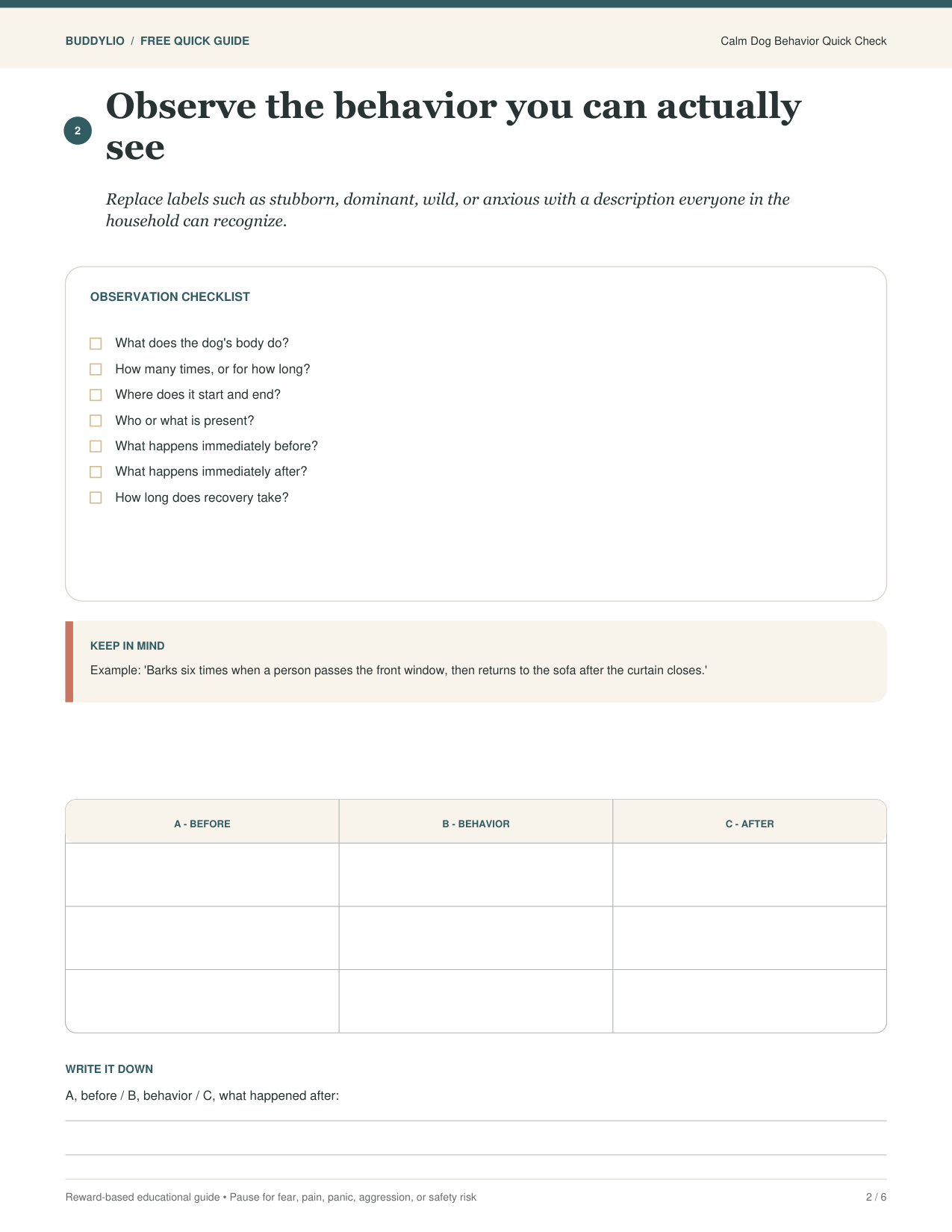
- Describe exactly what your dog does.
- Write down what happens before and after.
- Choose one safe behavior to reward.
Want step-by-step help?
Get six printable PDFs for barking, jumping, pulling, chewing, and calm daily routines. 78 pages total.
See the Calm Dog Behavior Bundle · $19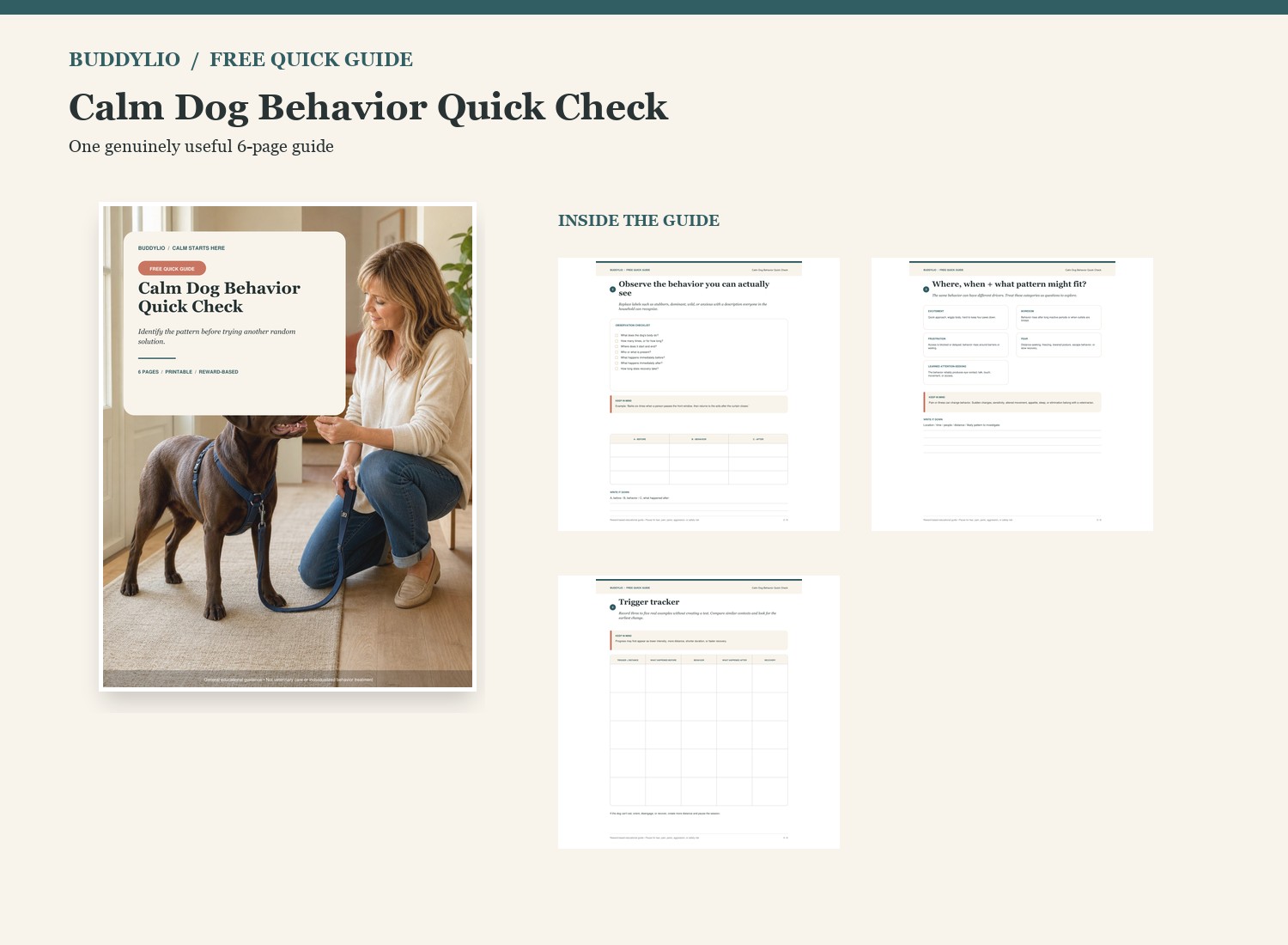
Focus on One BehaviorTrack one problem at a time.
Use Reward-Based StepsUse rewards, not force, from the very first step.
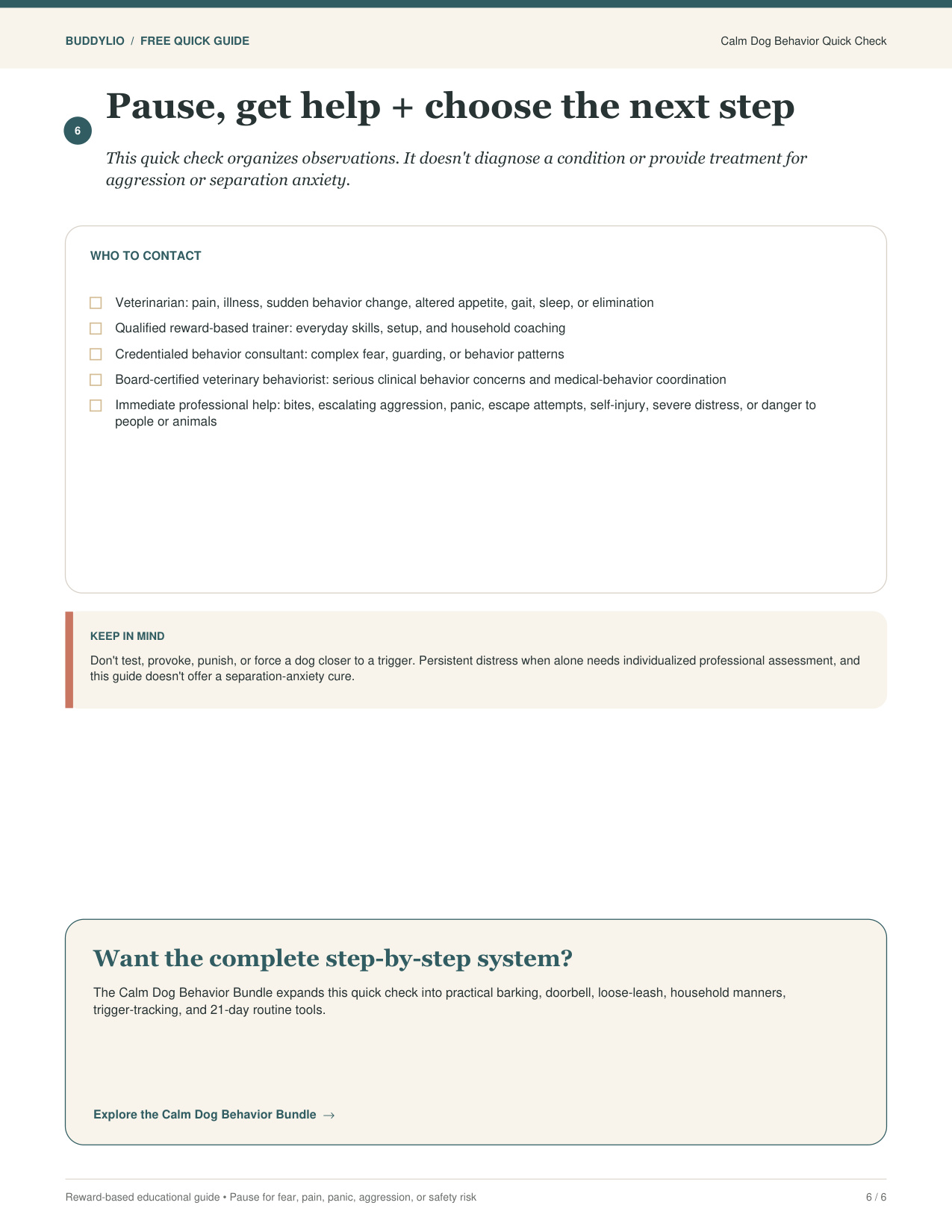
Know When to Get HelpSee when a veterinarian or qualified trainer should take over.
Turn a vague problem into a useful observation
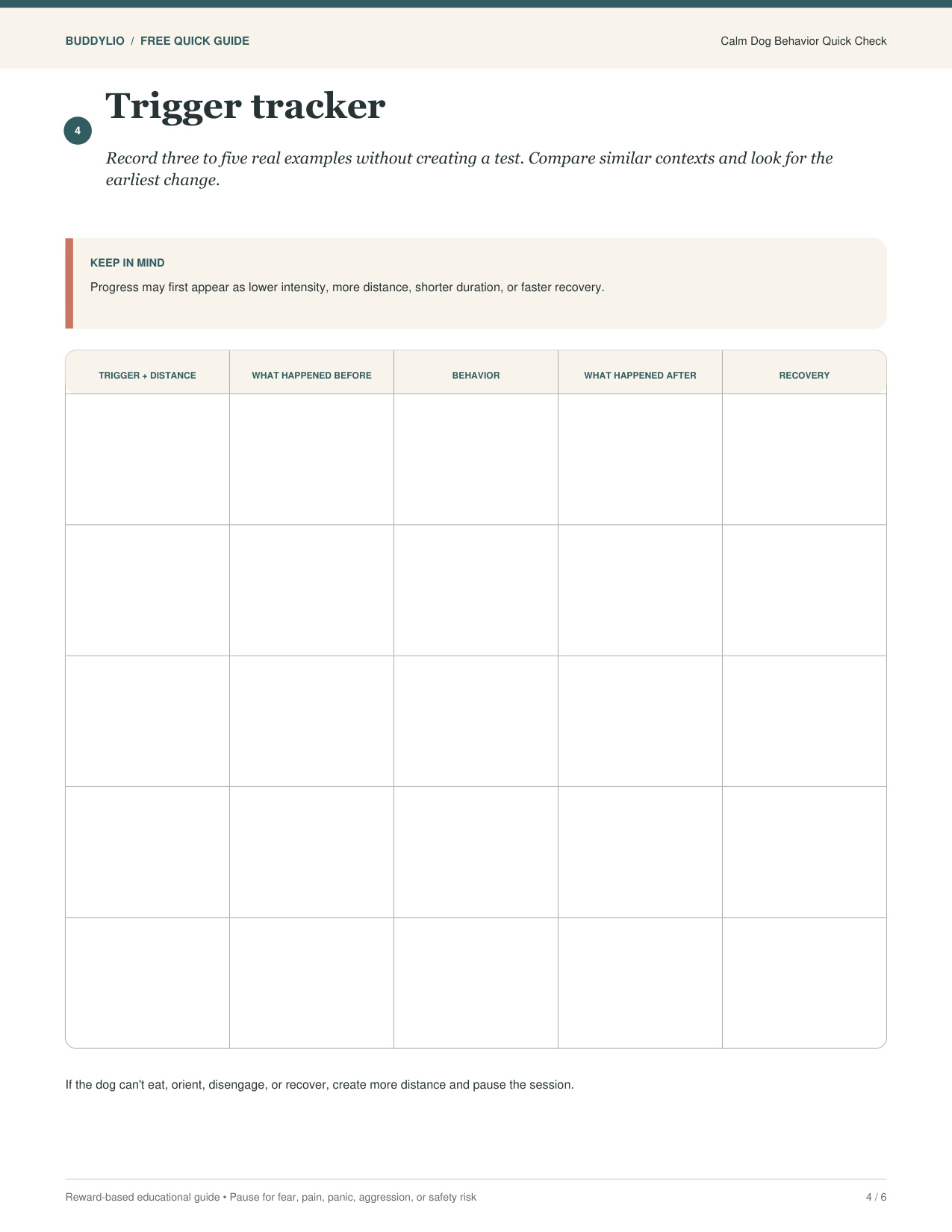
Use the pages together once, then keep the tracker for the moments that matter.
Clarity before correction
The guide doesn't label the cause of aggression, pain, fear, or distress. It helps you observe safely and recognize when a veterinarian or qualified behavior professional should take over.